

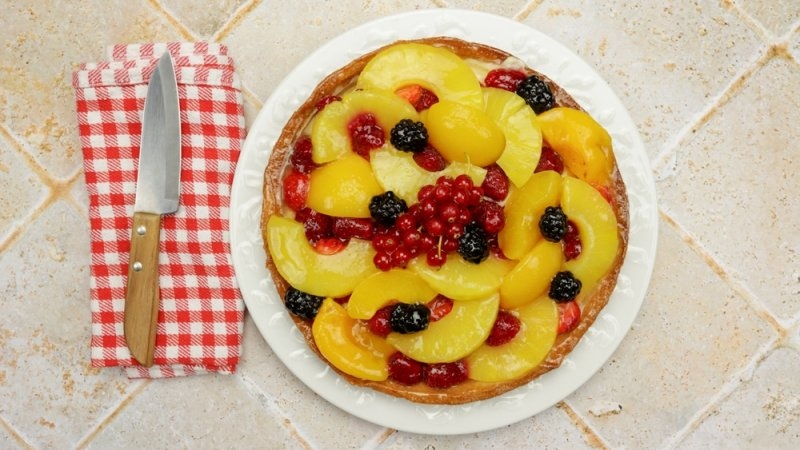
A Pasticciotto Tart brings out the best of Italian baking: crisp pastry paired with rich cream. It’s usually a small, filled pastry from Puglia, but the tart version turns it into a full-sized treat made for sharing. The crust should crackle ever so slightly, then melt away as you bite into that soft, creamy center.
Cherries keep every bite fresh, so the dessert never feels heavy. This tart looks like something you’d spend hours on, but honestly, the recipe’s pretty simple. You’ll find here all the practical tips you need—ingredients, filling advice, baking steps, a few ideas for serving, even comparisons if you’re curious.
The appeal of a Pasticciotto Tart is the contrast. The pastry has a buttery bite while the filling stays smooth and creamy. Unlike many Italian desserts, this one does not need layers of decoration or complicated finishing.
A good Italian pastry depends heavily on texture. Overwork the dough, and it becomes tough. Overcook the cream, and it turns grainy. Small details matter more than fancy techniques here.
This recipe is structured around three checkpoints: cold pastry dough, properly thickened cream, and controlled baking. Those are the areas most likely to change the final texture.
The Pasticciotto Tart should be fully cooled before slicing. Cutting too early makes the cream look loose, even when it has been cooked correctly.
Start by gathering some basics—good flour, cold butter, eggs, and a few simple flavors. That’s all you need to pull together the rich pastry, smooth cream, and sweet cherry layer that give the Pasticciotto Tart its charm.
For the pastry, grab
For the pastry cream
For the cherry layer
Don't Miss: Italian Dessert Pairings: What to Serve with Coffee & Wine
Get all three layers ready before baking, so the final tart comes out golden and beautiful.
Rub the cold butter into the flour until the mixture resembles coarse crumbs. Add sugar, salt, lemon zest, egg, egg yolk, and vanilla. Mix just until a dough forms. Do not knead it like bread.
Flatten the dough into a disc, cover it, and refrigerate for at least 30 minutes. After mixing your dough, chill it so the butter stays firm—it gives your crust that tender, crumbly edge.
To make the pastry cream: whisk together the egg yolks, sugar, and cornstarch until it all looks smooth and pale. It's that simple. Heat the milk with vanilla and lemon zest until steaming but not boiling.
Slowly whisk the warm milk into the yolk mixture. Return everything to the saucepan and cook over medium-low heat, stirring constantly. Once thick, cook for another minute. Transfer to a bowl, cover the surface directly, and cool.
The cream should be thick enough to hold its shape.
For a simple cherry tart recipe element, place cherries, sugar, and lemon juice in a saucepan. Cook gently until the fruit softens and releases some juice.
Mix cornstarch with water, stir it in, and cook briefly until glossy. Cool completely before assembling. The fruit should be thick, not watery.
Preheat the oven to 180°C. Roll about two-thirds of the chilled dough and use it to line a greased 9-inch tart pan. Spread the cooled pastry cream over the base. Spoon the cherry mixture across the cream, leaving a little space around the edge.
Roll the remaining dough and place it over the filling, sealing the edges gently. Prick the top in a few places. Bake for about 35–40 minutes, until the pastry is golden.
Cool completely before serving.
Top Pick: Fill Cannoli Siciliani Like a True Palermo Pastry Chef
The classic Pasticciotto Tart can be made with pastry cream alone, but cherries give it more contrast. Think of it as a meeting point between Italian desserts and a fruit Italian pastry.
| Filling | Texture | Flavor | Best For |
|---|---|---|---|
| Pastry cream | Silky and thick | Rich, vanilla-like | Classic version |
| Cherry filling | Soft and jammy | Tart and fruity | Less sweetness |
| Pastry cream plus cherries | Creamy with fruit | Balanced | Best overall |
Many Italian dessert recipes rely on mascarpone, ricotta, chocolate, or layered textures. The Pasticciotto Tart is different because the pastry itself plays a major role.
It also sits somewhere between a custard tart and a cherry tart recipe. The cream makes it richer than a basic fruit tart, while the cherries keep it from feeling overly dense.
A few simple techniques can help you achieve a crisp crust, smooth filling, and perfectly balanced Pasticciotto Tart every time.
Cold butter creates a more tender pastry. If the dough becomes sticky while rolling, refrigerate it again for 10–15 minutes. Do not compensate by adding lots of flour. Too much flour makes the crust heavy.
Warm pastry cream or cherry filling can soften the raw dough before baking. That leads to a weak base. Let both fillings cool properly, then assemble the Pasticciotto Tart.
A good pastry cream recipe depends on gentle heat and constant stirring. Once the mixture thickens, stop cooking after a short additional minute. Overcooking can make the filling rubbery.
Must Read: How to Make Pandoro Cake: A Detailed Step-by-Step Guide
What makes Pasticciotto Tart shine is how everything works together. The buttery crust gives structure. The pastry cream amps up the richness. Cherries add bright acidity. That’s the Italian way—keep it balanced, don’t overload with too many flavors. Once you nail the pastry cream, assembly is just putting everything together with care.
You end up with a Pasticciotto Tart that feels fancy enough for a dinner party but easy enough for a weekend bake. The filling adapts—swap in different fruit if you want, but honestly, cherries are a perfect place to start.
Technically, yes, but the texture changes. Eggs hold the crust together and make the cream lush. If you’re going egg-free, you’ll need a good starch-based custard and a different pastry recipe.
You can use prepared pastry cream when time is limited. Choose a thick variety rather than a pourable custard. The filling needs enough body to stay inside the tart while it is sliced.
Blind baking is not usually necessary for this version because the filling and pastry bake together. If your tart pan has a very thick base, partial blind baking can help prevent a soft bottom.
Freezing the tart is possible, but the pastry cream might get weird once it thaws. For best results, freeze the dough separately and make the cream fresh.
Absolutely—raspberries, apricots, blueberries, sour cherries. Stick with fruit that’s got a little tang. It cuts through the richness and keeps the tart from tasting bland.
This content was created by AI