

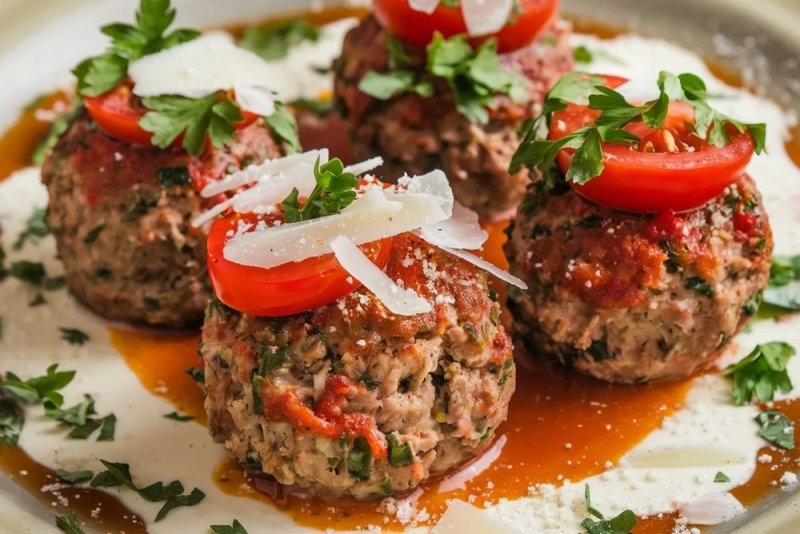
There's something about a pot of meatballs simmering on the stove that just feels like home. This Italian meatballs recipe covers everything, from mixing the meat to letting it all melt together in sauce, with exact quantities so nothing is left to guesswork. You'll see exactly what separates authentic Italian meatballs from the bland, rubbery ones many of us grew up with. Give it one try, and traditional Italian meatballs might just become your new Sunday dinner staple.
It's not about fancy ingredients, honestly. Real Italian cooks lean on a mix of beef and pork instead of one meat alone. Parmesan, garlic, and a handful of fresh herbs do the heavy lifting on flavor. The real trick is restraint. You want tender, not dense. Nobody's grandmother was packing her meatballs full of filler or breadcrumbs from a box she didn't season herself.
This makes about 20 meatballs, enough for four generous servings over pasta.
This part looks intimidating on paper. It's really not. Once you've done it once, you'll wonder why you ever bought the frozen bag.
Combine the breadcrumbs and milk in a small bowl and let them sit for five minutes. This softens the crumbs into a paste, called a panade, which is what keeps your meatballs from turning dense or dry once cooked.
In a large bowl, combine the beef, pork, soaked breadcrumbs, eggs, Parmesan, garlic, onion, parsley, salt, and pepper. Use your hands, not a spoon, but go easy. The second you start squeezing and packing the mixture too hard, you're setting yourself up for tough, rubbery meatballs. Mix just until everything comes together evenly, then stop.
Scoop out about 2 tablespoons of the mixture per meatball, roughly golf-ball sized, and roll gently between your palms. Set each one on a parchment-lined tray as you go. Chilling the shaped meatballs in the fridge for fifteen minutes helps them hold together better once they hit the heat.
Heat a large skillet over medium-high heat with a thin layer of olive oil. Sear the meatballs in batches for two to three minutes per side, until browned but not cooked through. You're not trying to cook them fully here, just building a golden crust that locks in juice.
In a large pot, heat the olive oil and sauté the onion until soft, about four minutes. Add the garlic and cook for thirty seconds, just until fragrant. Stir in the tomato paste, cook for one minute, then pour in the crushed tomatoes, salt, and pepper. Let it simmer uncovered for ten minutes.
Pour in the seared meatballs and simmer until everything is ready—about 45 minutes—leaving the pot covered partway. Gently stir occasionally to avoid sticking or breaking. It's here, at the slow cooking, that the true flavor comes through, and it's where homemade Italian meatballs come to be so much richer than the ones from the jar.
Stir in the torn basil right before serving, and taste for salt. Spoon the meatballs and sauce over spaghetti, tuck them into a sub roll, or serve them straight from the pot with crusty bread on the side.
Once you've made your own, going back is hard. Here's why homemade wins, side by side.
| Factor | Homemade Meatballs | Store-Bought Meatballs |
| Flavor control | You decide every herb and seasoning. | Locked into one salty, generic blend |
| Texture | Tender and light, shaped how you like | Often dense, sometimes rubbery |
| Ingredients | Real meat, cheese, and herbs | Fillers and preservatives, mostly |
| Cost per serving | Cheaper when you buy in bulk | Pricier for smaller portions |
Little mistakes are usually what separate a good batch from a forgettable one.
Spaghetti is the obvious pairing, sure, but it's far from the only one. If you're curious about branching out, this list of regional Italian dishes and authentic local flavors is worth a look. And if you're tired of the same box pasta every week, these authentic Italian pasta dishes Americans rarely try make excellent partners for a saucy batch of meatballs. Crusty bread or a simple salad works too, when you want something lighter.
Once you've got this Italian meatballs recipe down, complete with real measurements, you probably won't reach for the frozen bag again. It's not a complicated dish; it just rewards a little patience. Get the meat blend right, sear before you simmer, and let the sauce do its thing. Traditional Italian meatballs were never meant to be fussy; they were meant to feed people you love.
A mix of ground beef and pork gives you the juiciest results by far. Pork adds moisture and fat, while beef keeps things firm enough to hold their shape while cooking.
This usually happens when there's not enough binder or the mixture is too wet to start. Add a bit more breadcrumb and egg, then chill the shaped balls before cooking them.
Yes, and it cuts down on the mess considerably compared to pan-frying. Bake at 400°F for around twenty minutes, then let them finish simmering gently in your sauce.
Give them at least forty-five minutes, though a full hour is even better for flavor. The longer they sit in the sauce, the more tender and flavorful they'll become.
Definitely, whether cooked or raw, they'll keep well for up to three months if sealed tightly. Thaw them overnight in the fridge before reheating slowly in sauce.
This content was created by AI