

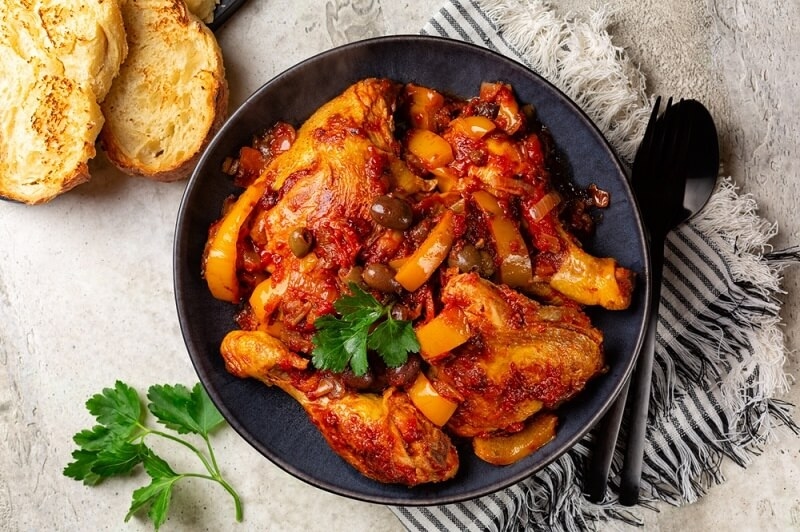
Chicken cacciatore is a dish that grew from simple needs and honest cooking. In Italian kitchens, hunter-style chicken was shaped by what hunters brought home after long days. This Italian braised chicken relied on patience more than skill. A cacciatore sauce recipe built from tomatoes and herbs slowly came together, forming a rustic Italian chicken meal that felt warm and filling. Traditional pollo cacciatore stayed close to the land and season, and chicken cacciatore still carries that same calm feeling today.
This dish was never meant to impress crowds, only to feed them well.
The word "cacciatore" means "hunter," and that meaning guides the recipe. Chicken cacciatore was built around what was available, not what was fancy.
Chicken cacciatore became known as hunter-style chicken because it matched a hunter’s pace. Italian braised chicken like this values time, not shortcuts.
Hunter-style chicken is about bold but steady flavors. Nothing sharp or flashy appears in the pot.
Common traits include
Hunter-style chicken developed into a reliable meal—rustic Italian chicken dishes like this filled homes with comfort and trust.
Italian braised chicken relies on gentle heat and covered pots. This method keeps meat tender and sauce rich.
Italian braised chicken avoids dryness. Chicken cacciatore benefits from this method because flavors sink deep into the meat.
Traditional pollo cacciatore depends on balance. Ingredients are few, but each has a purpose.
Common ingredients include
Traditional pollo cacciatore does not overload the pan. Rustic Italian chicken tastes best when ingredients stay simple.
A cacciatore sauce recipe grows slowly. Sauce is not rushed, and that matters.
The cacciatore sauce recipe forms the heart of chicken cacciatore. Italian braised chicken becomes memorable thanks to this rich sauce.
Tomatoes bring balance to chicken cacciatore. They cut richness while adding body.
Tomato roles include
In hunter-style chicken, tomatoes replaced game sauces when chicken became common. Rustic Italian chicken gained warmth from this change.
Herbs guide aroma more than taste. Traditional pollo cacciatore uses restraint.
Common herbs include
Italian braised chicken is layered with herbs, not spices. Chicken cacciatore stays gentle yet full.
Bone-in pieces suit the hunter-style chicken best. They stay moist during long cooking.
Preferred cuts include
Chicken cacciatore benefits from bones because the flavor stays in the meat. Rustic Italian chicken needs this richness to feel complete.
Sequence affects results. Italian braised chicken improves when the steps follow a logical order.
This order locks flavor early. Chicken cacciatore stays structured instead of muddy.
Texture tells when chicken cacciatore is ready. Fork-tender meat shows success.
Traditional pollo cacciatore rewards patience. Rushing creates tough and thin sauce.
Rustic Italian chicken looks simple on the plate. That is part of its charm.
Visual traits include
Hunter-style chicken was never polished. Chicken cacciatore feels honest, and that honesty comforts.
Sides should support, not compete—chicken cacciatore pairs well with calm starches.
Italian braised chicken sauces shine when gently absorbed. Rustic Italian chicken meals feel fuller this way.
Different areas adjusted traditional pollo cacciatore slightly.
Small variations include
Chicken cacciatore adapts easily. Hunter-style chicken always followed local habit.
Italian braised chicken stores well when appropriately cooled.
Chicken cacciatore often tastes better the next day. Sauce thickens, and flavors settle.
Chicken cacciatore continues to appear on tables because it fits real life.
Traditional pollo cacciatore remains steady. Rustic Italian chicken never tries too hard.
Mistakes can dull flavor quickly.
Italian braised chicken needs calm heat. Chicken cacciatore succeeds through care, not speed.
Chicken cacciatore fits both busy days and slow Sundays.
Hunter-style chicken adapts to the schedule without stress. Rustic Italian chicken respects time limits.
Traditional pollo cacciatore is a complete meal in a bowl. It’s almost always served over a bed of something to soak up all that incredible sauce. Polenta is the classic, creamy companion. Buttered pasta, like pappardelle or rigatoni, is another fantastic choice. For a lighter option, a big pile of mashed potatoes or even a slice of crusty, toasted bread works wonderfully.
Garnish with a sprinkle of fresh parsley and a final drizzle of your best olive oil. A simple green salad on the side is all you need to round out a perfect, comforting dinner. Leftovers, by the way, taste even better the next day.
Chicken cacciatore remains a trusted comfort dish shaped by time and patience. With hunter-style chicken methods, Italian braising techniques, and a steady cacciatore sauce recipe, rustic Italian chicken keeps traditional pollo cacciatore alive as a warm, reliable meal worth repeating.
In cooking, "cacciatore" means "hunter" in Italian. It refers to a rustic style of braising in which meat, often chicken or rabbit, is cooked in a savory tomato-based sauce with onions, herbs, and, usually, wine, much like a hunter might prepare outdoors.
Absolutely. After browning the chicken and vegetables on the stove for the best flavor, transfer everything to your slow cooker. Cook on low for 6-7 hours or on high for 3-4 hours, until the chicken is very tender.
Use a dry wine you enjoy drinking. A dry red like Chianti or Merlot gives a deeper, richer flavor. A dry white wine like Pinot Grigio makes a lighter, brighter sauce. Avoid cooking wines, as they can be overly salty.
If your sauce is runny after braising, simply remove the chicken and let the sauce simmer uncovered on the stove for 10-15 minutes. It will reduce and thicken naturally. You can also mix 1 teaspoon of cornstarch with 1 tablespoon of cold water, then stir it into the simmering sauce.
This content was created by AI