

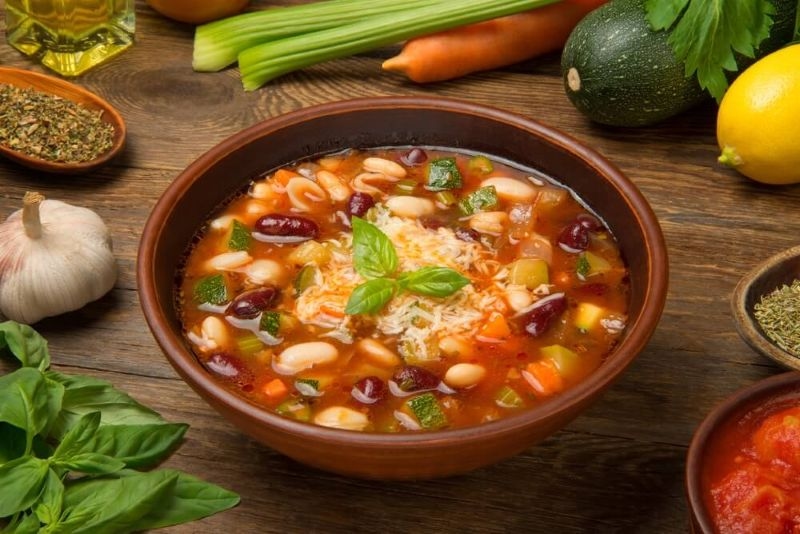
Minestrone soup has been around in Italy for centuries, but it still fits right in with the way people eat today. It’s not supposed to be showy or complicated. The whole point was to make a meal that could feed a family with whatever was growing nearby. And over the years, this soup turned into more than just a way to fill up.
People started thinking of it as comfort food—something that feels grounding and nourishing and just has that everyday warmth Italians love. So why does minestrone keep showing up on tables, generation after generation? It just fits into real life. You can have it for lunch or dinner, or heat it up tomorrow, and it’s still good—maybe even better.
Minestrone goes way back, long before anyone wrote down what went into it. Early Italians made it from whatever grains, beans, and vegetables they had on hand. Meat wasn’t a regular thing, so meals built on plants just made sense and became the norm. Over time, these practical recipes turned into the minestrone we know now—with endless ways to make it your own.
Different regions gave it their own twist. Up north, people tossed in rice or pasta. Down south, they leaned into tomatoes and olive oil. But they all kept the same idea at heart: take what’s local, make something filling, and let it change with the times. That flexibility helped minestrone stick around, no matter how much the world changed.
Honestly, it’s all about the simple stuff. The basics do all the heavy lifting. That’s where the magic happens. You start with onions, carrots, celery, tomatoes, beans, and whatever’s in season. Sometimes you throw in pasta or rice if you want it heartier. Herbs like basil, rosemary, and bay leaf add flavor without covering up the taste of the veggies.
Nothing fancy here—just simple and traditional minestrone ingredients you can actually find, and they don’t cost much. That’s why families keep coming back to it. No need for special shopping trips or expensive cuts of meat. It’s the kind of meal you make at home, not something you save for a special night.
People call minestrone a hearty Italian soup for a reason. It’s thick, filling, and really feels like a meal all on its own. The mix of veggies, beans, and grains gives it a chewy, satisfying texture.
That’s why it’s always been great for feeding a crowd. Add a hunk of bread or a sprinkle of cheese, and you’ve got dinner. Even if you just have a small bowl, it still feels like enough, and that’s part of its lasting appeal.
One of the best things about minestrone is how it changes all year long. Cooks across Italy make seasonal variations depending on what’s fresh. In spring, you get lighter veggies. Summer means tomatoes and zucchini. When it’s cold out, there are more beans, potatoes, and roots.
So it never gets old. Each batch is a little different, but always familiar. This way of cooking—using what’s in season—shows just how much Italians care about good food and fresh traditional minestrone ingredients. That’s a big part of why minestrone never goes out of style.
Minestrone soup gets called “rustic soup recipe” for a reason—you don’t have to follow any strict rules. You can eyeball the measurements, swap out ingredients, and if you mess up the order, it’s honestly no big deal. That’s part of the fun. It takes the pressure off and lets you get creative, which makes cooking a lot less stressful.
This kind of freedom encourages home cooks to just trust their gut. Out of carrots? Toss in zucchini or spinach instead. That flexibility is probably why minestrone has stuck around for so long. People want food that fits into their lives, not the other way around.
If you grew up in an Italian family, you probably remember watching someone—your mom, your nonna, maybe your dad—throwing together a pot of minestrone. It’s usually one of the first things kids learn to make because it’s simple, and it fills you up. There’s something special about learning a dish that’s been made the same way for generations.
It’s also just about the perfect fit for people who want to eat more plants these days. Younger folks love it for the health benefits, while older family members love it because it feels familiar. That shared love keeps the tradition going. No matter how much the world spins around us, the soup still means something.
Life doesn’t slow down, but minestrone’s ready for that. Make a big pot, toss some in the fridge, and you’ve got lunch or dinner sorted for days. Honestly, it’s perfect for meal prep. The soup gets even better after a little while—the flavors deepen and really come together.
Even with all the gadgets and shortcuts in modern kitchens, minestrone hasn’t really changed. Whether you cook it on the stove or let a slow cooker do the work, you still get the same warm, nourishing bowl. That’s probably why it never goes out of style.
The smell of vegetables simmering away in broth—it just brings you back. For so many of us, minestrone isn’t just soup. It’s family, someone poking at a bubbling pot, the kind of silence you only get at the table with people you love.
Minestrone isn’t just healthy—it feels like someone actually cares about you. You can taste the effort, the patience, all that time someone spent chopping and stirring just to make sure it turns out right. That’s one reason people never really get tired of minestrone. They come back to it, again and again.
Minestrone really nails that sweet spot in Italian food—everything just works together. You want to know what balance tastes like? Grab a bowl. It’s healthy, sure, but never dull. Simple, but packed with flavor. You don’t need anything fancy, just some fresh veggies, beans, maybe a scoop of pasta or a handful of rice.
This soup proves healthy food can actually taste good and make you feel good. One pot and you’ve got it all: a meal that comforts and feels right. That’s why minestrone keeps showing up, whether you’re in Italy or halfway across the world, whether you’re cooking for yourself or a big family.
Minestrone is Italy’s answer to healthy comfort food. It feeds you, adapts to whatever you’ve got on hand, and always brings a bit of warmth to the table. People have tweaked the recipe for ages, swapping in new ingredients, giving it their own spin, but the soul of the soup sticks around.
In a world that’s always racing ahead, minestrone kind of reminds you that the best meals don’t have to be fancy or complicated—they just have to be real.
It’s packed with vegetables, beans, and grains, so you get plenty of fiber, vitamins, and plant protein. And it’s light—easy on your stomach, but still filling.
Absolutely. People switch up the ingredients depending on what’s in season. Spring, summer, fall, winter—there’s always a way to make minestrone work.
It’s got a long history, classic ingredients, and you’ll find it in homes all across Italy. That’s as traditional as it gets.
Totally. It’s hearty enough to be a meal on its own, especially if you add a slice of bread or a simple side.
This content was created by AI