

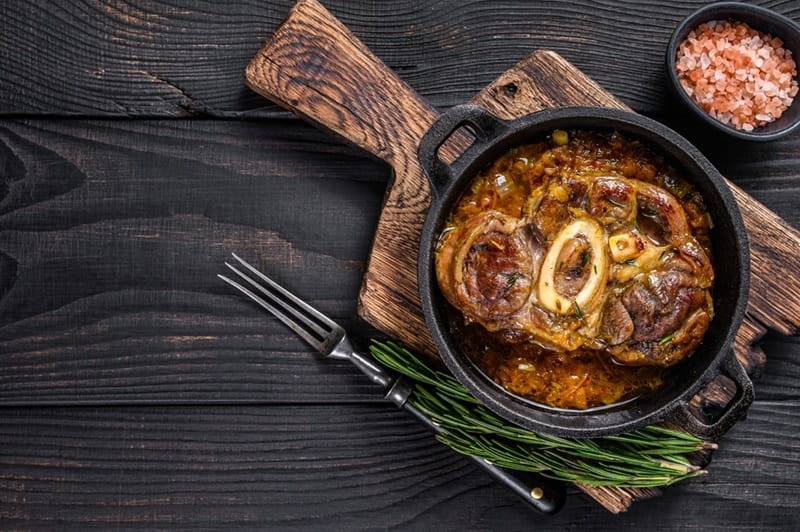
There are dishes that feed you, and then there are dishes that take you somewhere. A proper osso buco does both. It fills the kitchen with warmth, slows time just a little, and somehow makes a regular evening feel like a Sunday in Milan. This blog walks you through the heart of a traditional osso buco recipe, from its roots in northern Italy to the exact ingredients, the slow, steady cooking method, and the finishing gremolata that brings it all together. You will learn why braised veal shanks matter, how patience changes flavor, and how this slow-cooked Italian meat dish fits beautifully into an American home kitchen without losing its soul.
Osso buco is not flashy food. It is honest food. Before we get into the pot and the process, it helps to know where this dish comes from and why it has been loved for generations.
Osso buco was born in Milan, in the Lombardy region of northern Italy. The name literally means bone with a hole, a simple nod to the marrow-filled center of the veal shank. Back then, veal shanks were not prized cuts. They were tough, working muscles. So cooks did what smart cooks always do. They cooked them low and slow until they softened and turned rich.
This is classic peasant cooking logic. Use what you have. Treat it with care. Let time do the heavy lifting.
The traditional Milanese osso buco was often made without tomatoes, relying on broth, wine, and vegetables. Tomato versions came later. Both styles exist today, and both can be wonderful if treated with respect.
You know what? Osso buco feels special because it asks you to slow down. You cannot rush it. The meat needs time. The sauce needs time. Even the aroma takes its time creeping through the house.
In a country like the USA, where quick dinners rule weekdays, a dish like this feels almost rebellious. It says, sit down, pour a glass of wine, and let the pot do its thing.
Before the heat comes on, the ingredients deserve a moment. Osso buco is not about fancy extras. It is about balance and restraint.
Here are the traditional osso buco ingredients you will need. Keep them simple and fresh.
Veal shanks are the star. Their connective tissue melts into silk when cooked slowly. Flour helps with browning and lightly thickens the sauce. The onion, carrot, and celery form a gentle base, not a loud one. White wine brings brightness. Broth adds depth. Tomatoes add warmth and color without stealing the show.
And that marrow? Honestly, it is the reward. Rich, silky, and spoon-worthy.
This is where patience pays off. The cooking method is steady, forgiving, and deeply satisfying.
Let me explain something important here. Low heat matters. If the sauce bubbles too hard, the meat tightens. Gentle heat keeps everything relaxed.
Just when the dish feels rich and comforting, gremolata steps in and wakes it up.
Traditional osso buco gremolata is simple and fresh. It cuts through the richness without overpowering it.
To make it, mix together:
Sprinkle this mixture over the osso buco right before serving. The lemon zest adds brightness. The garlic adds bite. The parsley brings freshness. Suddenly, the whole dish feels lighter, almost playful.
Osso buco likes good company. It is not meant to stand alone.
In Milan, osso buco is often served with risotto alla Milanese. In the USA, that saffron risotto can feel fancy, but mashed potatoes, creamy polenta, or even buttered egg noodles work beautifully.
A simple green salad with lemon dressing helps balance the richness. Crusty bread is not optional. You will want it for the sauce.
Some cooks use beef shanks instead of veal, especially if veal is hard to find. The flavor changes slightly, but the soul stays intact. A slow cooker can also work, though browning the meat first is still worth the effort.
Seasonal vegetables can sneak into the pot. A few mushrooms in fall or extra carrots in winter feel natural, not forced.
A traditional osso buco recipe is more than braised veal shanks and sauce. It is Milan on a plate. It is slow-cooked Italian meat that respects time and simplicity. With the right ingredients, a steady hand, and a bright gremolata at the end, this dish turns an ordinary evening into something memorable. Cook it once, and it tends to find its way back into your kitchen again and again.
Yes. Osso buco tastes even better the next day. Reheat gently on the stove to keep the meat tender.
Traditional Milanese osso buco uses veal, but beef shanks can work if cooked long enough.
No. Some classic versions skip tomatoes entirely and rely on broth and wine for flavor.
Gremolata adds freshness and contrast, balancing the richness of the slow-cooked sauce just before serving.
This content was created by AI