

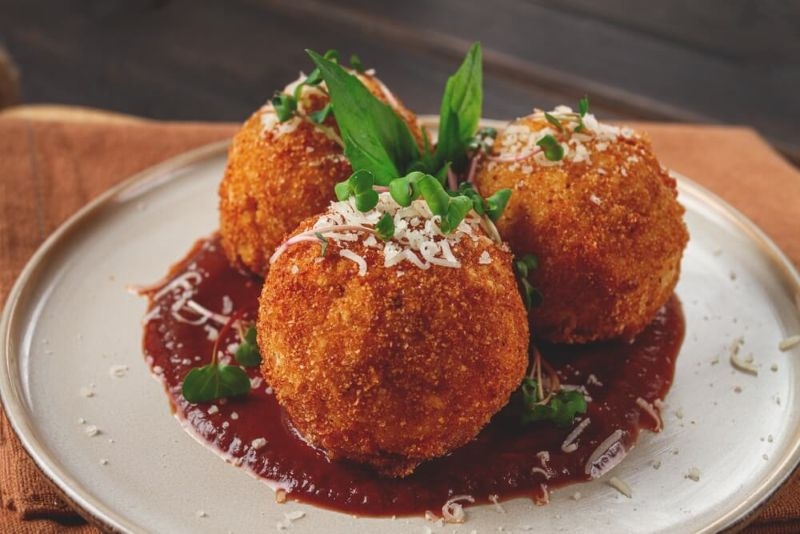
There are foods that taste good anywhere. Then there are foods that taste like a place. Arancini falls into that second category. One bite and it’s all warm rice, savory filling, and that crunch that makes people go quiet for a second. Like, “Hold on… this is serious.”
The funny part? Most home cooks assume arancini is complicated. Restaurant-only. Vacation-only. But an authentic arancini recipe is totally doable in a regular kitchen. It just needs a little patience, good rice, and a few small tricks that make a big difference.
And yes, this can taste like Sicily. Not an exact replica of a street stall in Palermo, but close enough that someone might start planning a trip.
This is where it gets fun. And slightly chaotic. In a good way.
Now the coating:
That three-step layer creates the crunch people want. It’s the backbone of crispy arancini coating that doesn’t slide off during frying.
Arancini are often described as Sicilian rice balls, but that simple phrase hides a lot. Sicily takes arancini seriously. The rice is not bland. The filling is not random. And the outer crust should crackle when it hits the teeth.
Authentic arancini usually starts with risotto-style rice cooked until creamy, then cooled until firm enough to shape. The filling is often ragù with peas, or ham and cheese, depending on the region. The coating is layered: flour, egg, breadcrumbs. Then it gets fried until golden.
It’s Italian street food with a bit of craft behind it. Not hard, but definitely not rushed.
Arancini doesn’t require rare ingredients, but quality matters. The rice choice is huge. Arborio is common and easy to find. Carnaroli is even better if available because it holds texture while staying creamy.
For the rice base:
For the filling:
This is where traditional arancini filling comes in. It should be bold and savory, not watery. If the filling is too loose, shaping becomes a mess.
For the coating:
A good crispy arancini coating depends on dry breadcrumbs and proper chilling before frying.
Step one is making the rice base that will hold together without turning into a brick.
Cooling is non-negotiable. Warm rice will fall apart. The best move is spreading it on a tray and chilling it for at least 2 hours, or overnight if possible.
This is the unglamorous secret behind smooth fried arancini preparation. Cold rice shapes cleanly. Warm rice makes people question their life choices.
Frying scares people because it feels unpredictable. But arancini is pretty forgiving if the oil temperature stays steady.
If the oil is too cool, the coating absorbs oil and turns heavy. If it’s too hot, the outside burns before the center warms. A thermometer helps, but if someone does not have one, this works: drop in a breadcrumb. If it sizzles actively and browns in about 30 seconds, the oil is in a good zone.
This is classic Italian street food logic. Hot oil. Quick fry. Big reward.
Sicily has regional preferences, but these are popular classics:
This is the famous one. Meaty tomato sauce, peas for sweetness, mozzarella for melt. It’s the flavor most people picture when they think “arancini.”
Simple, salty, creamy. Great for kids. Great for adults too, obviously.
Not traditional in every area, but still very Sicilian in spirit. Comforting, rich, and balanced.
The key is keeping the traditional arancini filling thick. Let ragù reduce until spoonable, not runny.
Usually because it wasn’t chilled long enough, or it is too wet. Cool longer. If needed, mix in a little extra Parmesan to help bind.
That often happens when the rice surface is too damp. Chill the shaped balls. Then coat. And press the breadcrumbs gently.
Fry a bit longer at the right temperature, or warm the filling slightly before stuffing. Not hot, just not fridge-cold.
Breadcrumbs might be too coarse or oil too cool. Use fine breadcrumbs and keep temperature steady.
Arancini is great on its own, but dipping sauces make it feel like a proper spread.
Serve them hot. That first bite matters. The crunch matters. The steam matters. That’s the moment when the kitchen suddenly feels like a tiny Sicilian café.
And honestly, if someone makes this arancini recipe once, they usually make it again. Not immediately. Because frying is still effort. But soon.
Arancini is secretly a meal prep champion.
They can also be frozen after coating. Freeze on a tray, then store in a bag. Fry from frozen at slightly lower heat so the center warms without burning the outside.
That is real-life friendly fried arancini preparation.
Yes, but the texture will be different. Baking can still taste good, but it will not match the deep crunch of a fried version. Brush with oil and bake at 400°F until golden.
Arborio is widely available and works well. Carnaroli holds structure even better while staying creamy, which helps shaping and keeps a nice bite.
Chill the shaped balls before coating and again before frying. Also keep the filling thick, not watery, and avoid overcrowding the pot so oil temperature stays steady.
This content was created by AI