

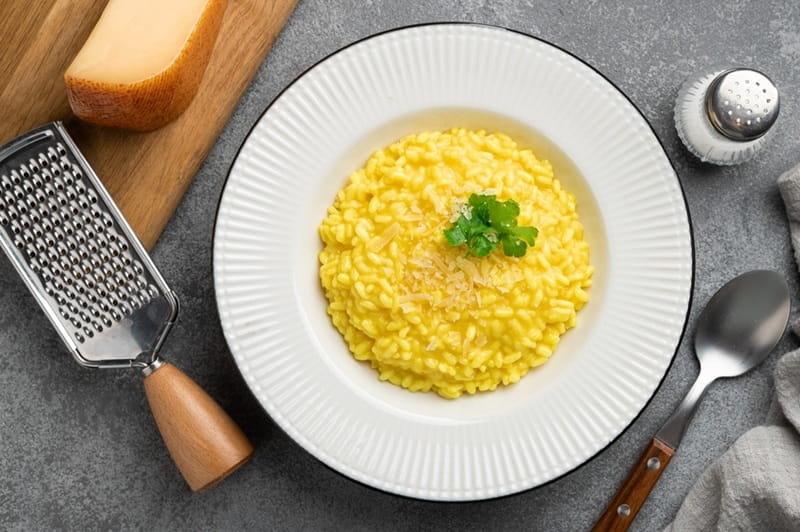
Risotto alla milanese is more than simply a dish; it embodies the gastronomy of Northern Italy. The exquisite golden colour, rich texture, and simple yet elegant nature of the dish reflect its status as one of Italy's most famous rice dishes. Risotto alla milanese, like all dishes made with saffron, has been developed over centuries through the practices, patience, and skills of Italian artisans.
What distinguishes risotto alla milanese from other risottos is that risotto alla milanese combines the traditional, time-honoured Italian techniques of preparing risotto with the finest grade of rice and the distinctive fragrance of saffron. In the first mouthful, you will taste, experience, and appreciate all three elements - history, flavour, and technique - integrated flawlessly.
Risotto alla Milanese originated in the 1500s when saffron was first introduced to rice dishes in Milan. According to legend, during a celebration at the cathedral, saffron was used to color the rice yellow, creating what eventually became one of the city's treasured recipes.
Initially, there were no guidelines or standards for creating saffron risotto; while preparing it, Milanese chefs focused more on balance than on excess ingredients. As butter replaced olive oil and marrow was used to add richness, specific varieties of rice, such as Carnaroli and Arborio, began to be standardized for Milanese Risotto. By defining how to make Milanese Risotto, these ingredients will yield a smooth, creamy, and elegant dish.
Risotto alla Milanese continues to set the standard for Italian rice dishes today and is prepared in homes and restaurants throughout Italy.
Saffron is an essential element of the dish risotto alla milanese. The dish loses its color and identity without saffron. The aromatic properties of saffron impart earthiness and floral notes to the rice, accentuating its flavours without obscuring them. When preparing a saffron risotto, one should soak saffron threads in hot (or warm) broth before adding the saffron to the rice.
By doing so, one will have uniformly distributed saffron and avoid the bitterness of uncooked saffron. Properly prepared saffron provides both the unmistakable aroma and the golden colour associated with saffron risottos. Saffron contributes significantly to the traditional preparation techniques used in authentic Milanese cooking (e.g., enhancing the overall appearance and depth of flavour of a dish).
Risotto alla Milanese is made only from a short list of top-shelf products, and using fewer, better-quality ingredients yields an authentic Risotto alla Milanese recipe. The ingredients of authentic Risotto alla Milanese are:
The rice absorbs liquid gradually over time, the butter adds flavor and richness, and the cheese seals the cream's stringy quality in the authentic Risotto alla Milanese method. When combined, these ingredients create a culinary masterpiece celebrated worldwide as one of the most regal Italian rice dishes.
A traditional risotto technique will separate mediocre rice from a delicious risotto alla milanese. This process starts with sautéing the onions in butter, then toasting the rice to "seal" its surface and help it hold onto its starch.
It is essential to add your broth gradually. By adding warm stock slowly and in large amounts, you encourage the rice to release its starch, creating the creamy, velvety consistency associated with risotto without using any cream.
Constant stirring will help ensure that the rice cooks evenly and does not stick together.
Using these creamy risotto techniques, along with a combination of additional fats and aromatics, will allow you to create an elegant, luxurious, and balanced dish from ordinary rice and other basic ingredients.
Only certain types of rice work for risotto alla milanese, and the varieties you will find in Italy (such as Arborio and Carnaroli) have high starch content, which makes them suitable for the creamy preparation associated with the dish.
Carnaroli rice is sometimes a better choice for preparing risotto alla milanese because it retains its shape and can achieve creaminess. Arborio rice, which is slightly softer, is commonly used in home kitchens.
Using the right kind of rice will allow you to prepare risotto alla milanese with a firm texture (al dente) and the exceptional "mouthfeel" we look for in the finest Italian rice dishes.
The mantecatura is the finishing technique for risotto alla milanese. At the end, when the rice has been thoroughly cooked, remove the pot from the burner, mix in butter and Parmigiano-Reggiano cheese, and continue mixing with an up-and-down motion until both are thoroughly combined.
The technique of combining these ingredients produces a creamy and glossy texture, which is the hallmark of all risottos. A properly made risotto will flow easily when poured onto a dish, it should not be too thick or goopy. This method of preparing risotto has been passed down through generations and is one of the most critical aspects of traditional Italian cooking.
Among all types of Italian Rice-Based Dishes, Risotto Alla Milanese is served in an exclusive, simple, and elegant manner. Unlike most other types, such as Seafood or Vegetable Risottos, the saffron rice recipe relies solely on technique to showcase the rice rather than additional flavorings. This is why Risotto Alla Milanese is frequently served with Osso Buco, providing a balance to the dish rather than overshadowing it.
It is a timeless appeal that has remained relevant for hundreds of years in traditional Italian cooking.
Certainly! Home cooks can reproduce authentic Italian restaurant-style risottos with a bit of patience and attention, but it takes some preparation. Preparation includes having your broth hot before adding it to the pot, stirring in a measured manner throughout the process, and following the traditional technique used in preparing Risottos. Do not rush this process; allow the rice to absorb the liquids gradually, and taste often. Believe in the methods you have learned, as they will ensure you prepare authentic Milanese Risottos that deliver incredible results every time.
Italian food and tradition can be embodied in many ways; however, few dishes symbolize their unity as much as risotto alla milanese, which has existed for centuries, thus proving that when simplicity is combined with professionalism, it is a timeless classic.
The traditional Italian dish of risotto alla milanese, with its beautiful saffron colour and smooth creaminess, is a classic expression of the Italian culinary art. With its rich heritage and exquisite preparation, risotto alla milanese is a hallmark of Italian cuisine worldwide.
The defining component of Risotto Alla Milanese is the saffron, which signifies that this recipe uses traditional techniques for preparation & creamy risotto cooking without excessive or overwhelming flavors.
The best rice varieties for Milanese Risottos are Carnaroli and Arborio because both have a high starch content, which helps create creamy risottos.
In an authentic saffron risotto recipe, saffron is an essential ingredient as it imparts the characteristic golden hue, aroma, and taste of Risotto Alla Milanese.
Novice cooks can be successful at making Risotto Alla Milanese by applying the techniques associated with making risotto. With attention and patience, they can make food of restaurant quality at home.
Risotto alla milanese is typically served immediately after cooking, when it is still slightly loose in texture. It pairs well with classic Italian dishes, such as osso buco for the most balanced meal.
This content was created by AI