

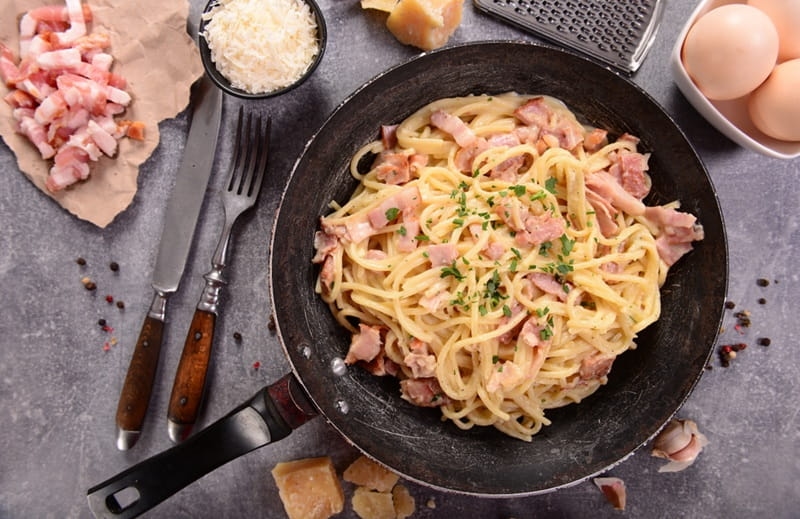
A pasta carbonara recipe should feel comforting, not confusing. Many people search for this dish and end up with plates full of cream, butter, or garlic that overpowers everything. Here’s the thing: authentic carbonara never needed those extras. This guide explains how to make carbonara using authentic carbonara ingredients and a straightforward method that stays true to Italian carbonara preparation. Traditional carbonara sauce is made from eggs, cheese, and the heat already present in the pasta. Carbonara cooking tips help protect that balance. This pasta carbonara recipe keeps the process honest, simple, and friendly for everyday kitchens.
The preparation of Italian carbonara grew out of practical cooking. It was never meant to be fancy food. The dish relied on items that lasted long and cooked fast. Eggs, cured pork, dried pasta, and hard cheese could be stored easily. What this really means is that carbonara values method over decoration.
Many food historians link carbonara to Rome and nearby regions. The recipe spread because it was filling and fast. Traditional carbonara sauce does not simmer for hours. It came together in minutes. This history explains why timing still matters so much in a proper pasta carbonara recipe today.
Authentic carbonara ingredients are few, but each one matters. Adding extra items completely changes the dish.
The classic list includes
Authentic carbonara ingredients rely on natural fat and salt. Eggs provide creaminess. Cheese brings a sharp flavor. Pork adds depth. The preparation of Italian carbonaradepends on these elements working together. When any part is missing or replaced, the balance shifts.
Learning how to make carbonara feels easier when the steps stay calm and clear. This dish moves quickly, so preparation matters.
Bring a large pot of water to a boil. Add enough salt so the water tastes well seasoned. Cook pasta until just tender, not soft. Reserve at least one cup of pasta water before draining. This starchy water later later helps form the traditional carbonara sauce.
Cut guanciale or pancetta into small strips or cubes. Place them in a cold pan and turn the heat to medium. Let the fat melt slowly. Stir occasionally until pieces turn golden and crisp. Lower the heat once done. This fat becomes part of the sauce.
In a bowl, whisk together egg yolks, 1 whole egg, grated cheese, and black pepper. Stir until thick and smooth. This mixture should not be watery. It is the core of the pasta carbonara recipe.
Traditional carbonara sauce scares many cooks, but the method stays simple. The sauce does not cook like soup or gravy. It forms from the gentle heat already present.
Add the drained pasta to the pan with the cooked pork. Toss the so pasta absorbs some fat. Remove the pan from direct heat. Pour the egg mixture over the pasta while tossing quickly. Add small amounts of pasta water if needed. The sauce should look glossy and coat each strand.
Carbonara cooking tips that matter here
Italian carbonara preparation trusts patience more than force.
Carbonara cooking tips often save the dish at the last moment. Small actions make a big difference.
Helpful reminders include
A pasta carbonara recipe works best when attention stays steady. Even short pauses can change the sauce texture.
Many carbonara plates fail because of small choices. Knowing what to avoid helps protect flavor.
Common mistakes include
Traditional carbonara sauce depends on timing and trust. Authentic carbonara ingredients already contain enough richness. Extra items usually hide mistakes rather than fix them.
This pasta carbonara recipe fits real homes. It does not require special tools or rare skills. The steps follow the the Italian carbonrecipewhile rremainingg flexible enough for busy cooks. Eggs create silkiness. Pork fat binds flavors. Cheese sharpens each bite.
What this really means is that carbonara rewards respect. Learning how to make carbonara once builds confidence for many future meals. The method stays the same, even when portions change.
Scaling a pasta carbonara recipe can feel tricky. The key is balance.
Simple portion guidance
Authentic carbonara ingredients still behave the same, just in larger amounts. Carbonara cooking tips stay unchanged.
Carbonara tastes best right after cooking. The sauce thickens as it cools, so timing matters.
Serving suggestions
Italian carbonara preparation respects simplicity. The pasta should stand on its own without distraction.
Carbonara is best fresh, but leftovers happen. Handling them gently helps.
Storage tips
Carbonara cooking tips suggest avoiding microwaves when possible. Gentle heat protects the sauce.
This pasta carbonara recipe proves that simple food can feel complete. With authentic carbonara ingredients, steady timing, and care, traditional carbonara sauce forms naturally. Italian carbonara preparation depends on trust and patience. Follow these carbonara cooking tips, and a classic meal comes together with confidence and warmth every time.
While you can, it's not traditional and will change the flavor profile. American bacon is often smoked and sweetened, which will impart a very different taste to the delicate sauce. For a more authentic result, seek out pancetta or guanciale.
The eggs in carbonara are not raw; the residual heat of the pasta gently cooks them. Using fresh, high-quality eggs from a reputable source minimizes risk. However, if you are pregnant, elderly, or have a compromised immune system, you may want to exercise caution.
This usually means you either didn't use enough grated cheese to help thicken the emulsion, or you didn't toss the pasta vigorously and long enough. The agitation is crucial for the sauce to come together. Next time, try adding more cheese and throwing for a full two minutes.
Carbonara is truly best eaten fresh. Reheating can cause the sauce to break and the eggs to scramble. If you must, reheat leftovers very gently in a skillet over low heat, adding a small splash of water to help loosen the sauce
This content was created by AI