

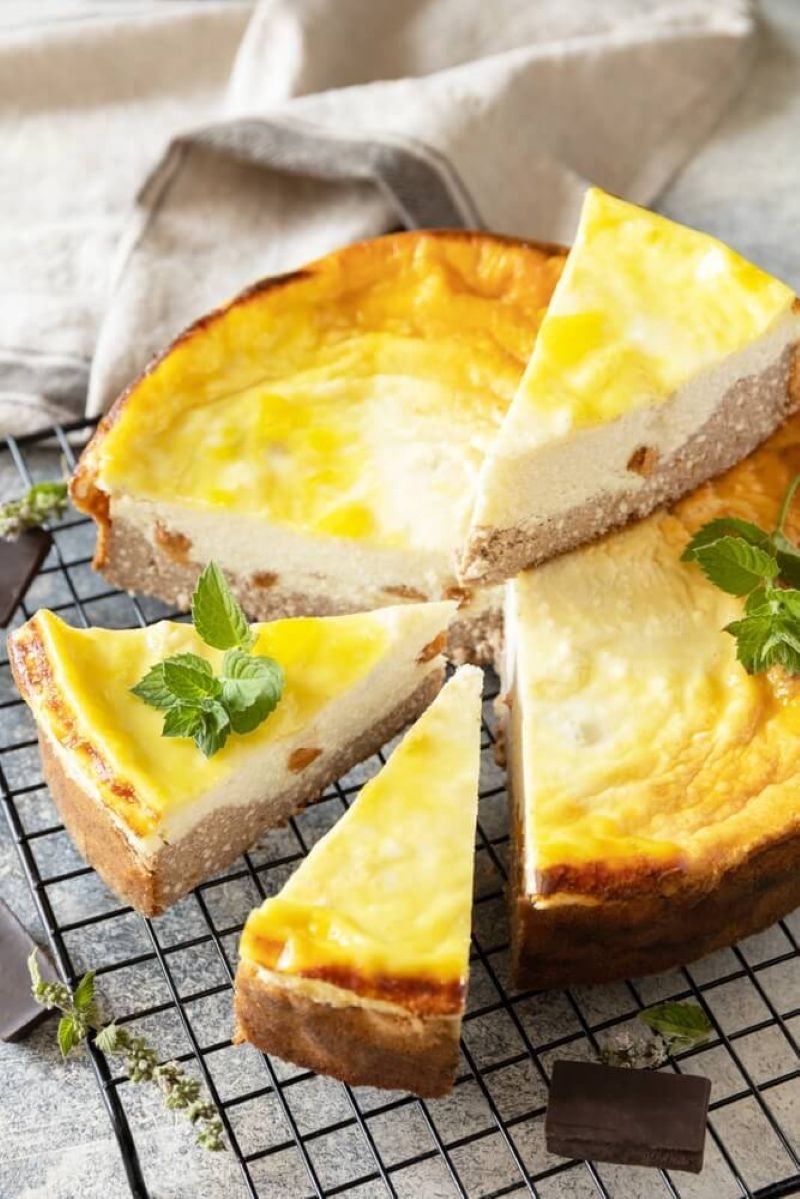
American cheesecake has a certain reputation. It’s rich. Dense. Almost heavy in a comforting way. One slice can feel like a full meal, and nobody’s really surprised by that.
Then someone tries Italian ricotta cheesecake for the first time and pauses. It tastes softer. Airier. Less sweet. More “cake” than “brick of cream cheese.” And suddenly the comparison becomes obvious: these are two different desserts that just happen to share the word cheesecake.
This blog breaks down how ricotta cheesecake differs from the American style, why it tastes the way it does, and how people can make it at home if they want that lighter, more delicate finish after dinner.
The simplest way to explain the difference is texture. American cheesecake is usually built on cream cheese. That gives it a thick, silky density. Ricotta cheesecake uses ricotta as the main dairy, which changes everything.
Ricotta is naturally lighter and grainier than cream cheese. When it’s mixed well and baked properly, it creates a cake that feels fluffy and tender, not heavy. That’s why many people describe it as a light ricotta dessert even though it’s still a real dessert with real richness.
It’s also usually less sweet. Italian desserts often lean restrained, letting citrus, vanilla, or almond do the talking instead of pure sugar.
Ricotta is made differently from cream cheese. It’s a whey cheese, meaning it comes from the leftover liquid after other cheeses are made. It holds moisture in a different way, and it doesn’t create that dense, smooth block texture that cream cheese does.
That can be a good thing, but it also means ricotta cheesecake needs a bit more care. If ricotta is watery, the cake can bake up loose or soggy. If it’s not mixed properly, it can feel grainy.
The trick is choosing good ricotta and draining it if needed. A few minutes in a fine mesh strainer can make a big difference.
When people say traditional Italian cheesecake, they’re often talking about a family-style dessert that varies by region. Some versions include a crust. Some don’t. Some use citrus zest and vanilla. Others include candied fruit, chocolate chips, or a hint of cinnamon.
In some areas, ricotta cheesecake is almost like a baked ricotta custard. In others, it’s a more structured cake slice that holds its shape neatly.
So yes, there is an Italian style, but there isn’t only one version. Italy doesn’t do “one version.” Italy does “my grandmother’s version.”
American cheesecake often focuses on richness first. Italian ricotta cheesecake focuses on balance.
The most common flavor notes include:
That citrus lift is why many people end up loving a lemon ricotta cake style cheesecake. It tastes fresh. It feels lighter. It doesn’t sit like a stone after dinner.
And it pairs well with berries, honey, or a simple fruit compote without needing a thick sauce to “save” it.
This is not the only way to make it, but it’s a solid home-friendly base for anyone who wants the real vibe.
Ingredients:
Steps:
This is a classic Italian cheesecake recipe style method. Gentle mixing and moderate heat keep the texture light instead of dense.
American cheesecake is often baked in a water bath to avoid cracks and keep it creamy. Ricotta cheesecake can benefit from gentle baking, but it’s usually more forgiving.
Cracks can still happen, especially if the oven runs hot or the cake cools too quickly. But cracks are not the end of the world. A dusting of powdered sugar covers a lot of sins. And honestly, homemade cakes are allowed to look homemade.
This dessert is often described as a baked ricotta dessert for a reason. It’s not trying to be a perfectly polished restaurant slice. It’s meant to feel like something served at a family table.
This matters. A lot.
If someone expects the ultra-smooth texture of New York cheesecake, ricotta cheesecake may surprise them. Even when mixed well, ricotta has a slightly different mouthfeel. It can be airy, tender, and lightly textured rather than perfectly silky.
That’s not a flaw. That’s the point.
When done right, ricotta cheesecake tastes like a soft cake with a gentle cheese flavor, not like a dense cream cheese block.
Italian ricotta cheesecake usually doesn’t arrive with a mountain of toppings. It gets treated with respect. A little fruit. A little sugar. That’s it.
Great serving ideas:
This is where the “light” part shows up again. It’s a light ricotta dessert that doesn’t need heavy sauces to feel complete.
The ricotta may have too much moisture. Drain it, and use a little flour or cornstarch to help set.
The ricotta wasn’t mixed enough, or it was low quality. Whip it longer, or try a smoother ricotta brand.
Overbaking can cause this. Pull it when the center still has a slight wobble, then let it finish setting as it cools.
That can happen if the batter was overmixed or the cake cooled too fast. Gentle mixing and a slow cool help.
Because it feels different. It feels like dessert without the food coma. It’s the kind of cake someone can eat after a big meal and still feel human afterward. It also feels adaptable. Add citrus, add chocolate chips, add a hint of cinnamon. Make it more like a lemon ricotta cakeone day, more vanilla-almond the next.
And once someone gets used to the lighter texture, American cheesecake starts to feel like the intense cousin who shows up loud and steals the whole conversation. Both are great. They’re just not the same.
Yes. Many Italian versions are crustless and bake as a simple cake. The texture stays light and the slices still hold well after chilling.
Ricotta contains less fat than cream cheese and creates a more airy structure when baked. It’s less dense, less heavy, and often less sweet.
Keep it covered in the refrigerator for up to 4 days. Let slices sit at room temperature for a few minutes before serving for the best texture.
This content was created by AI