

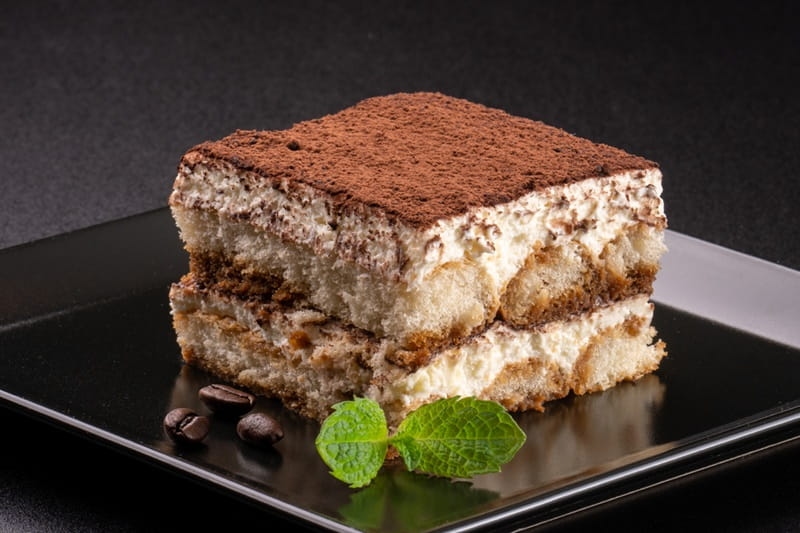
When you think of Italian cuisine, you can't help but think of tiramisu! The word itself means "pick me up," and when you taste it, you'll know why. Tiramisu is a dessert made with coffee and creamy goodness. When you make authentic tiramisu, you keep things simple. Tiramisu is made with a small number of particular ingredients, and the traditional way to prepare it is straightforward. Even though it's not a complicated dessert to make, every step in preparing it is hugely important. Ultimately, your goal is to make a light yet satisfying Italian coffee dessert.
Authentic Italian tiramisu is neither overly sweet nor overly heavy. The espresso, mascarpone cheese, and cocoa powder work perfectly together to give you an explosion of flavors. Making tiramisu at home lets you choose high-quality ingredients for each layer, enabling you to create a tiramisu that may actually taste better than one you would find in a restaurant. So let's break down how to make a tiramisu from scratch!
Some desserts fade when trends change. This tiramisu recipe stays because it respects balance. Sweet never overpowers bitter, and cream never feels heavy.
Reasons it remains loved
Italian coffee dessert traditions value ease and patience. What this really means is the recipe fits real kitchens, not just restaurant tables.
Traditional tiramisu preparation follows a rhythm. Each step builds on the last, and skipping ahead creates problems later.
Key ideas behind the method
Traditional tiramisu preparation is less about skill and more about restraint. Homemade tiramisu improves when nothing is rushed.
Authentic tiramisu ingredients do more than add flavor. They define the dessert's structure. Changing even one ingredient alters the balance.
Core authentic tiramisu ingredients include
Authentic tiramisu ingredients appear in every classic version of this Italian coffee dessert. Substitutions often lead to heavier textures and muddled tastes.
The mascarpone tiramisu layers depend entirely on the quality of the cheese. Mascarpone should feel thick yet soft, never watery.
Mascarpone tiramisu layers rely on folding, not beating—overworking results in a grainy texture that cannot be corrected later.
Coffee is not just a flavor. It provides contrast. In an Italian coffee dessert, bitterness keeps sweetness under control.
Italian coffee dessert traditions respect clarity. Clean coffee keeps the tiramisu recipe grounded and balanced.
The cream base forms the backbone of the tiramisu recipe. Mistakes here affect everything that follows.
Traditional tiramisu preparation depends on the texture at this stage. Smooth cream leads to stable mascarpone tiramisu layers.
Ladyfingers act as the quiet structure inside homemade tiramisu. They should absorb flavor without losing shape.
Homemade tiramisu falls apart when the ladyfingers become too wet. Balance keeps the dessert sliceable and neat.
Mascarpone tiramisu layers should feel calm and even. Uneven layers cause sliding and soft spots.
What this really means is that patience creates structure. Mascarpone tiramisu layers settle better when left undisturbed.
Chilling is part of traditional tiramisu preparation, not an afterthought. It allows flavors to merge and textures to firm.
Homemade tiramisu improves with time. Rushing this step weakens the final result.
Many mistakes happen before serving, not during cooking. Awareness prevents waste.
Traditional tiramisu preparation avoids heavy hands. Authentic tiramisu ingredients perform best when treated gently.
Italian coffee dessert recipes rely on contrast, not excess. Tiramisu works because each element balances the next.
This tiramisu recipe respects that balance. Homemade tiramisu should feel complete without added extras.
Serving style affects how flavors are perceived. Homemade tiramisu should be cold but not stiff.
Authentic tiramisu ingredients shine best when the presentation stays simple.
Because homemade tiramisu uses fresh eggs and dairy, storage matters.
Freezing is not recommended. Mascarpone tiramisu layers lose texture once thawed.
Minor adjustments are fine as long as they respect the core method.
Avoid changing the structure. Traditional tiramisu preparation depends on specific ratios that hold everything together.
This tiramisu recipe fits casual dinners, celebrations, and quiet weekends alike.
Italian coffee dessert culture values versatility. Homemade tiramisu reflects that idea well.
This tiramisu recipe proves that simple steps and honest ingredients create lasting comfort. With authentic tiramisu ingredients, carefully layered mascarpone tiramisu, and a patient, traditional tiramisu preparation, homemade tiramisu becomes a gentle Italian coffee dessert worth savoring and sharing slowly.
Yes, you can. You can gently cook the egg yolk and sugar mixture over a double boiler until it reaches 160°F, then cool it before adding to the mascarpone. For the whites, you can substitute an equal amount of whipped heavy cream.
Properly stored and covered, it keeps well for 2 to 3 days. The flavors actually improve after the first day. It does not freeze well, as the cream's texture can become grainy.
Simply omit it. The dessert will still be delicious. For a flavor twist, some people add a bit of orange juice or non-alcoholic coffee syrup to the dipping mixture.
For an authentic tiramisu, no. But if you absolutely cannot find it, a mix of full-fat cream cheese thinned with a bit of heavy cream might mimic the texture, though the taste will be different.
This content was created by AI