

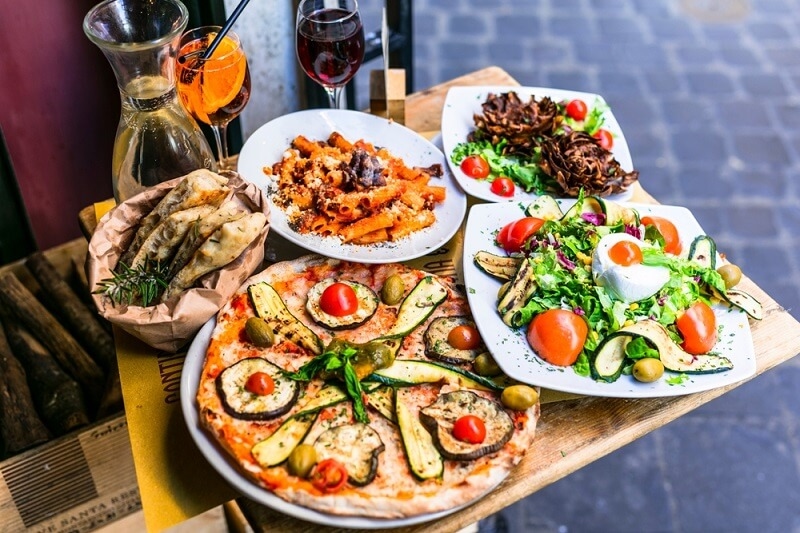
Italian regional cuisine grows from the land, the weather, and old family habits that stayed in small towns for years. Here’s the thing. Food in Italy never followed one rule. Northern Italian food uses butter and grains, while southern Italian dishes lean on olive oil and sun-grown produce. These regional food differences help explain why Italian culinary regions feel so distinct. Local Italian specialties reflect what people had nearby, not what sounded fancy. Italian regional cuisine stays tied to daily life, and that makes it easy to understand and enjoy.
Italian culinary regions shape cooking more than written recipes ever could. Each area built food traditions around survival and comfort, not trends.
What this really means is that Italian regional cuisine tells a story of people adapting. Northern Italian food formed in colder areas, while southern Italian dishes developed under warmer skies. Regional food differences grew naturally over time.
Northern Italian food often feels rich and filling. Cold winters pushed cooks to rely on butter, rice, and hearty meats.
Italian culinary regions in the north value warmth and fullness. Local Italian specialties from this area often feel calm and smooth on the tongue.
Several well-known dishes show how northern Italian food works in practice.
Italian regional cuisine from the north tends to avoid sharp flavors. The goal is comfort and balance, not bold spice.
Southern Italian dishes feel brighter and lighter. Warm weather allows fresh vegetables, olives, and tomatoes to grow with ease.
Here’s the thing. Southern Italian dishes reflect abundance. Italian regional cuisine in the south celebrates freshness and speed, not heavy cooking.
Southern Italian dishes originated among farming and fishing families who needed quick meals. Ingredients stayed few, but quality mattered.
Regional food differences appear clearly here. While northern Italian food builds layers slowly, southern Italian dishes keep steps short and honest.
Central Italy connects the north and south in flavor and method. Italian culinary regions here blend richness with freshness.
Italian regional cuisine in central areas feels steady. Local Italian specialties often combine traits from both sides without excess.
Regional food differences did not happen by accident. Mountains, coastlines, and plains strongly shaped diets.
Italian culinary regions grew apart because travel was slow in the past. Italian regional cuisine became local before it became national.
Local Italian specialties often exist only in one town or valley. These foods reflect pride and memory.
Local Italian specialties help preserve identity. Italian regional cuisine survives through these small details.
Italian regional cuisine never aimed to be uniform. Variety is seen as strength, not confusion.
What this really means is that Italian food cannot be reduced to one style. Regional food differences define the entire experience.
Ingredient choice clearly separates Italian culinary regions. Each area used what grew best nearby.
Italian regional cuisine stays honest because ingredients remain local. Local Italian specialties rely on simple, trusted food.
Pasta shapes and sauces shift with location. Italian culinary regions treat pasta as a base, not the star.
Differences seen include
Regional differences in food texture appear even in texture. Italian regional cuisine adapts pasta to local climates and cultures.
Italian regional cuisine reflects daily routines, not just special events.
Daily habits include
Northern Italian food may feel heavier at lunch, while southern Italian dishes tend to stay lighter in the heat. Italian culinary regions align food with life rhythm.
Understanding Italian regional cuisine helps when reading menus or cooking at home.
Local Italian specialties often reveal more than guidebooks. Regional food differences become clear through tasting, not theory.
Italian regional cuisine continues to guide modern cooking. Many chefs return to regional roots for inspiration.
Italian culinary regions offer lessons in restraint and care. Both Northern Italian food and Southern Italian dishes teach balance in different ways.
Italian regional cuisine shows how land and people shape food over time. From northern Italian food to southern Italian dishes, regional food differences create variety and depth. Italian culinary regions protect local Italian specialties, keeping traditions alive through simple, honest meals shared daily.
The most significant difference comes down to geography and climate. Northern Italy's cooler, landlocked areas favor rich fats like butter and hearty staples like rice and polenta. Southern Italy's sunny, coastal climate leads to a cuisine built on olive oil, abundant tomatoes, and fresh seafood.
There is no "best" region—it's entirely a matter of personal taste. Food lovers seek out Emilia-Romagna for its cheeses and cured meats, Campania for pizza and mozzarella, or Sicily for its unique cultural fusion. The beauty is in the diversity.
Start with the classics that define their regions: Risotto alla Milanese in Lombardy, Tagliatelle al Ragù in Bologna, Pizza Margherita in Naples, and Orecchiette con Cime di Rapa in Puglia. Each is a direct taste of place.
Yes, but not always in the same way. Pasta is a national staple, but its form, typical sauce, and even its importance in the meal can vary dramatically. The north often uses fresh egg pasta, such as tagliatelle, while the south is famous for dried durum wheat pasta in shapes like orecchiette.
This content was created by AI