

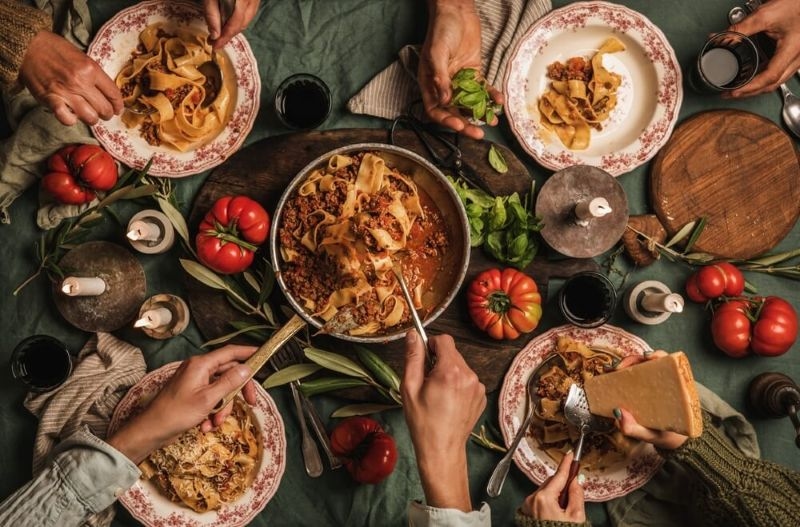
In Italy, food goes way beyond eating. It’s tied to family, to history, to how people live every day. Meals move slowly, and sharing a table is about a lot more than just getting fed. If there’s one tradition that really matters, it’s Sunday dinner. That’s when families drop everything, come together, and just spend time around the table.
Whether you’re in a tiny city apartment or a big country house, Sunday dinner in Italy belongs to the family. Food pulls people together, even when everything else is up in the air.
For Italians, Sunday dinner in Italy means more than just what’s on the table. It’s about belonging. Sundays are for rest, thinking, and, most of all, being with family. People plan their whole week around it, knowing they’ll spend the day with relatives. Sharing a meal isn’t just about eating—it’s sharing life. It’s a chance to reconnect, smooth over arguments, and just enjoy being together.
Families eat together all week, but Sunday is different. Weekday meals might be quick, but not on Sundays. Everybody’s expected to sit down—sometimes for hours. Kids learn how to behave at the table. Adults swap stories. Grandparents pass along advice. These moments pull families closer and leave memories that stick. It’s how families hold on to that feeling of unity.
For a lot of families, Sunday lunch is even bigger than dinner. Lunch starts around noon and can drift into late afternoon. No one’s in a hurry. The food is richer and more complicated than what you’d see during the week. People take real pride in cooking dishes that show off their roots. Even now, Sunday lunch is the best part of the week—a slice of comfort and something familiar.
There’s a rhythm to Sunday meals, shaped by pranzo domenicale traditions. It’s all about respect, patience, and joining in. Everyone shows up on time. No one eats alone, and nobody runs off right after. Food comes out in a certain order, and conversation flows. Kids learn to slow down and appreciate the moment. Through these habits, families hang onto their culture.
Sunday gatherings mean lots of courses, each one planned and served in its own time. Between courses, people laugh, swap stories, and soak up the moment. The meal shifts into something bigger—a little adventure, not just a pit stop to eat. When you eat this way, it’s pretty clear: the time together matters way more than just finishing another meal.
On Sundays, food bridges the gap between generations. Grandparents usually take charge in the kitchen, teaching recipes they learned as kids. Parents help, and children watch and lend a hand. Cooking together brings everyone closer and keeps old traditions alive. These meals are where family stories get told, and history is remembered. Food teaches, connects, and holds families together—no words needed.
Italy’s regions each put their own spin on Sunday lunch, but the heart of the tradition never really changes. Up north, families might go for heavier, richer dishes. In the south, people usually keep their meals light and fresh. But come Sunday, pranzo domenicale changes everything. That’s when families from every corner of Italy gather around the table, no matter what.
Every region shows off its personality through food, but the simple act of gathering every Sunday links everyone. That blend of local flavor and national tradition makes Italian culture feel so alive.
There’s more to these get-togethers than just food. Sundays in Italy usually stretch out—people chat before the meal, linger over coffee, or take a walk together once the plates are cleared. Sometimes, the conversation just keeps rolling, long after lunch is technically over. Sunday dinner isn’t just about eating; it’s a whole day set aside for family and connection.
These long, easy gatherings help families stay close and look out for one another.
Honestly, you can’t overstate how much comfort Italians find in Italian family meals. Sunday lunch just feels safe. It’s warm, familiar. You sit at the same table, week after week, and somehow that routine makes life a little steadier, even when the rest of the world won’t stop spinning.
Those long lunches, with all their courses, open up time for real talk—or just comfortable silences that say enough on their own. Honestly, that sense of comfort is what keeps these traditions alive.
Of course, modern life changes things. Families are smaller, everyone’s busier, and city life speeds everything up. Some folks don’t meet as often, and meals can get a little simpler. But the core idea—coming together—holds strong. Sunday lunch might not last as long as it used to, but people still show up and put in the effort. That’s how this tradition sticks around—it bends, but it doesn’t break.
Life’s always rushing by, but in Italy, Sunday dinner gives everyone a reason to slow down. It’s more than just food; it’s a reminder that the people around you matter more than any distraction. Sitting at the table lifts your spirits and chases away loneliness. You pick up patience, gratitude, respect—stuff you don’t get from scrolling on your phone. Real connection happens when you spend time together, not when you’re glued to a screen.
If we want pranzo domenicale to stick around, we’ve got to share it. Parents need to get their kids involved — bring them into the kitchen, let them chop, stir, taste, mess things up a little. Sure, maybe the Sunday meal isn’t as elaborate as it used to be, but the heart of it stays. Families don’t lose their traditions when they tweak them for modern life.
They’re actually holding on, making sure those moments still matter. That’s why Italian culture keeps its energy, even while the world shifts around it.
Sunday meals really are the heart of Italian family life. Sunday dinner in Italy isn’t just about eating—it’s about love, tradition, and sticking together. Families spend time, swap stories, and pass down values around that table. There’s something special about a traditional Sunday lunch, shaped by old pranzo domenicale customs, that just pulls everyone closer.
These big, multi-course Italian meals aren’t just meals—they’re a ritual that still defines Italian culture. Even as life changes, Sunday dinner keeps reminding everyone that, in the end, family matters most.
Sunday dinner in Italy isn’t just about food. It’s the time when families sit down together, catch up, and keep their traditions alive. It’s about real connection.
These meals aren’t rushed. On Sundays, Italian families take their time. Meals stretch on, everyone lingers at the table, and it’s all about being together—not just eating fast and moving on.
For pranzo domenicale, families sit down together for a proper multi-course meal. Everyone has their role—maybe grandma makes the pasta, someone else pours the wine. The whole thing is about slowing down and enjoying each other’s company.
Definitely, life’s changed, sure, but a lot of families still gather for Sunday lunch, even if they tweak old traditions to fit their schedules. The spirit of it is still very much alive.
This content was created by AI