

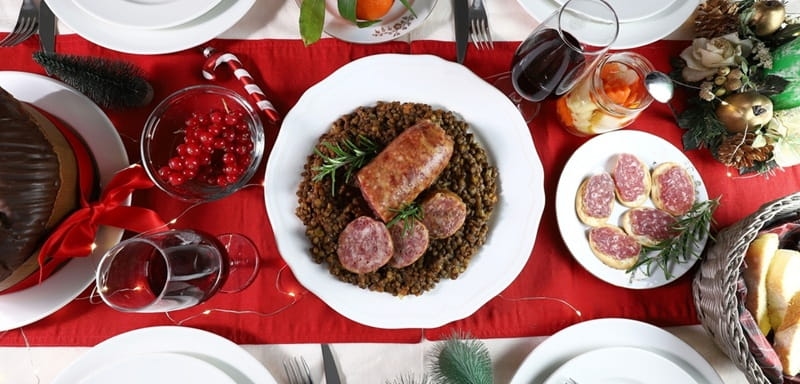
Christmas in Italy doesn’t whisper. It sings. It clatters with plates, hums with simmering sauce, and smells like citrus peel and warm bread. Italian holiday tables are loud, generous, and full of heart. That’s what makes them so appealing to families in the US. This isn’t about fancy plating or stiff rules. It’s about togetherness, stories told twice, and food that makes you slow down. In this guide, we’ll walk through Italian Christmas food traditions, from Christmas Eve seafood feasts to cozy desserts, and how you can make them feel right at home in your own kitchen.
Italian Christmas food isn’t a single menu. It’s a rhythm that stretches across days, sometimes weeks. Meals change, but the feeling stays the same. Full tables, open kitchens, and recipes that carry memories.
In many Italian homes, Christmas food matters more than what’s under the tree. Cooking is a gift. You show love by stirring, tasting, and waiting. That’s why dishes are often slow-cooked and shared family-style. You’ll notice that traditional holiday meals focus on comfort rather than flash. They’re meant to feed many people without stress, even if the kitchen gets a little chaotic.
Italy is famously regional, and Christmas proves it. In the north, you might see rich butter-based dishes and stuffed pastas. In the south, olive oil, seafood, and citrus take center stage.
Christmas Eve dinner, Italian style, is lighter in spirit but still abundant. The focus turns to the sea, and yes, this is where the feast of seven fishes comes into play.
The feast of seven fishes is more common among Italian American families, but it’s inspired by southern Italian Catholic traditions. The idea is simple. No meat on Christmas Eve, so seafood steps in. Seven can represent sacraments, days of creation, or just tradition passed down without explanation. You know how that goes.
Common dishes might include fried calamari, baked clams, shrimp in garlic sauce, and salt cod. Not all at once for everyone, but enough to feel festive.
Here’s the thing. You don’t need seven complicated recipes. Many families keep it simple with a few reliable favorites.
These dishes feel special without being heavy. Plus, they leave room for dessert, which matters.
Christmas Day is when things turn rich and comforting. This is when ovens work overtime, and kitchens smell like bread and cheese.
Lasagna often takes center stage. So does baked ziti or cannelloni. These dishes are filling, familiar, and perfect for feeding a crowd. They also reheat well, which is a quiet holiday miracle.
In many homes, pasta is followed by roasted meats, maybe a stuffed pork roast or chicken with herbs. The meal unfolds slowly. No one’s rushing.
Vegetables matter too, even if they’re not the star. Roasted potatoes, sautéed greens, and simple salads balance the table. These sides keep the meal grounded and remind you that Italian cooking often shines brightest when it’s simple.
No Italian Christmas Day table feels finished without bread. Crusty loaves, focaccia, or simple dinner rolls are always within reach, ready to soak up sauce or sit beside a plate of pasta. Sometimes there’s a small dish of olive oil, sometimes butter, sometimes nothing at all.
Dessert is not an afterthought. It’s an event. Italian Christmas desserts are designed to linger, just like the conversations around them.
Panettone is the most famous, tall, and airy with dried fruit. Pandoro follows close behind, buttery and dusted with sugar. These cakes aren’t rushed. They’re sliced slowly and shared with coffee or sweet wine.
Then there are cookies. Lots of them. Anise-flavored, almond-based, jam-filled. Often made days ahead, stacked high, and eaten without counting.
In many Italian homes, dessert stretches for hours. Someone pours espresso. Someone else opens a bottle saved just for this day. Plates refill. No one complains. It’s less about hunger and more about staying together a little longer.
Italian Christmas isn’t just Eve and Day. It’s a season of eating, honestly.
Leftovers are planned. Pasta becomes lunch the next day. Cakes last a week, sometimes more. This isn’t laziness. It’s tradition. Food is meant to be enjoyed, not rushed or wasted.
Lighting candles, setting the table carefully, and using the good plates. These small acts turn everyday food into something meaningful. You don’t need to copy everything. Just choose what feels right for your family.
You don’t need an Italian grandmother or a marble kitchen to make this work. You just need intention and a little patience.
Use what’s available. Swap fish types. Buy good bread from a local bakery. Brands like De Cecco for pasta or San Marzano-style tomatoes can help, but perfection isn’t the goal. Comfort is.
Get kids involved. Let them stir, sprinkle sugar, or tear basil. These moments stick. Years later, they’ll remember the mess more than the menu.
Italian Christmas food traditions endure because they’re human. They allow noise, mistakes, and second helpings. They welcome everyone to the table, even if the recipe isn’t perfect.
And honestly, that’s what many families crave during the holidays. Less pressure. More warmth. Food that tastes like care.
You don’t have to recreate Italy. Just borrow the parts that make sense. Slow down. Cook something that takes time. Sit longer than planned. That’s the real tradition.
Italian Christmas food traditions remind us that holidays aren’t about perfection but presence. From seafood-rich Christmas Eve dinners to slow, comforting Christmas Day meals and lingering desserts, each dish creates space for connection. When you bring these traditions into your home, you’re really inviting patience, warmth, and shared memories to the table. Cook a little slower, serve a little more, and let the meal stretch on. That’s where the magic lives during the holidays with family and friends everywhere today.
Sharing long meals with family matters more than any single dish. The experience comes first, the menu second.
It’s more popular among Italian Americans, though it’s inspired by southern Italian Christmas Eve customs.
Yes, many recipes are designed for advanced prep, especially pasta bakes and desserts.
They’re usually balanced, not overly sweet, with flavors like citrus, nuts, and light sugar notes.
This content was created by AI