

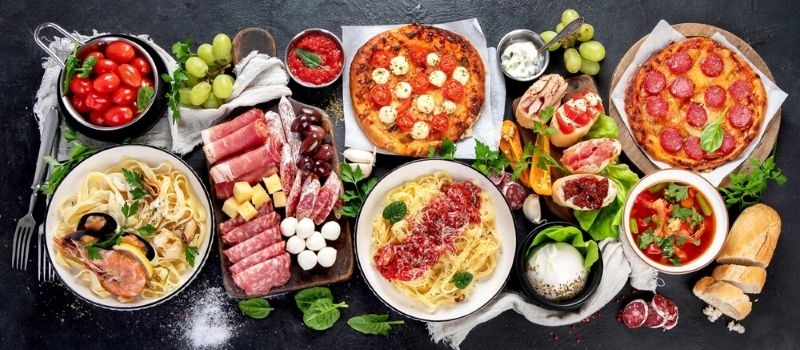
Some traditions don’t live in museums. They live in kitchens. In crowded living rooms. In the way someone insists you take “just a little more” before you even finish what’s on your plate.
That’s the feeling Italian feast days carry. They are not only dates on a calendar. They are moments when faith becomes something you can taste, family becomes something you can hear, and community becomes something you can’t really avoid. In a good way.
If someone has ever wondered why Italian celebrations feel so food-centered, the answer is simple: the table is the meeting point. That’s where belief, memory, and love show up together. Loudly.
This blog explores how Italian feast days connect food, family, and faith, and why these traditions keep surviving in a modern world that’s always rushing.
At their core, what are Italian feast days? They are special days, often tied to the Catholic calendar, honoring saints, the Virgin Mary, or major religious events. But in Italy, these days rarely stay only inside a church.
They spill into streets. Neighbors gather. Bells ring. Food appears. Someone’s aunt starts cooking at sunrise like it’s a sport.
These aren’t generic celebrations either. Many communities have a patron saint, and their feast day becomes a local identity marker. It’s a way of saying, “This is who we are. This is what we remember.”
That’s why these traditions feel so personal. They are not just holidays. They are belonging.
Food has always been a language in religious life. Fasting, feasting, sharing, offering. These actions express gratitude, sacrifice, and togetherness without needing long speeches.
In Italy, many religious food celebrations follow a pattern:
There is something grounding about it. Prayer may start the day, but the meal often carries it forward. It makes the spiritual feel tangible.
And yes, it also gives people an excuse to cook the foods they only make once a year. Which, honestly, is part of the magic.
If there’s one truth about traditional Italian holidays, it’s that family shows up. Sometimes happily. Sometimes because someone would be offended if they didn’t. Either way, they show up.
These days aren’t just about eating together. They’re about remembering who taught the recipes, who used to sit at the table, and what stories get repeated every year. The same jokes. The same arguments. The same “you’ve gotten so thin” comments that are obviously not true.
But those repetitions matter. They make the day feel stitched into the family timeline. Every generation inherits a version of the tradition, then tweaks it. Quietly. Usually without admitting it.
Not every feast day is only a home event. Many turn into Italian food festivals that take over town squares and narrow streets.
Imagine stalls selling local pastries, roasted chestnuts, fried treats, or regional specialties made only for that festival. Add music. Processions. Decorative lights. Children running around with sugar on their faces. That mix of sacred and social is classic Italy.
These gatherings also function as cultural food events. They preserve regional dishes that might fade away otherwise. When a community celebrates something annually, the recipes become part of public memory.
Even visitors can feel it. You don’t need to be from the town to sense that it matters.
Certain meals appear again and again across different regions, especially around major Christian holidays. These festive Italian meals tend to carry symbolism, history, and practicality.
Here are a few examples people often associate with feast seasons:
In many Italian-American families, this is huge. Seafood-focused, often tied to Catholic traditions of abstaining from meat on Christmas Eve. In Italy, the exact form varies by region, but the idea of a special meatless feast is familiar.
After Lent, Easter meals often feel abundant. Lamb, eggs, sweet breads, and pastries show up. It’s food that signals renewal and celebration.
In some communities, Saint Joseph’s Day involves special breads, pastries like zeppole, and “St. Joseph’s Tables” where food is prepared and shared in honor of the saint. It’s devotion expressed through generosity.
These patterns help explain why Italian feast days feel emotionally powerful. The food does not just fill a stomach. It marks time.
Many feast days include processions, where statues of saints are carried through streets while people follow behind. Sometimes there’s music. Sometimes there are fireworks. Sometimes there is a quiet seriousness that shifts into celebration afterward.
Food often comes after the public ritual, almost like a collective exhale. A way to say, “We honored what we believe. Now we honor each other.” This is why the blend of sacred and social feels seamless. The event moves from church to street to table without needing explanation.
It’s also why these celebrations attract outsiders. People are curious. They want to witness real tradition, not a staged version.
Modern life can pull people apart. Different schedules, different cities, different priorities. Feast days push back against that. They force a pause. They demand togetherness, even if it’s imperfect togetherness.
They also preserve identity. For immigrants and diaspora communities, feast day traditions can be a bridge back to heritage. A way to stay connected to hometown culture, even across oceans.
And for younger generations, these days offer something rare: a sense of continuity. A reminder that life isn’t only scrolling and deadlines. It’s also rituals, recipes, and shared meaning.
That’s what keeps traditional Italian holidays alive. Not nostalgia. Relevance.
Not everyone lives in a town with a saint procession and food stalls. But the spirit can still be practiced.
A few simple ways:
The goal isn’t perfection. It’s connection. The kind that happens when people slow down long enough to be present.
These are small acts, but they echo the same idea behind religious food celebrations: food is a way of showing love and belonging.
Many are rooted in religion, especially Catholic traditions, but they also function as cultural and community celebrations. Even non-religious people may participate for the food and family traditions.
It depends on the region, but many towns host festivals tied to patron saints, harvests, or seasonal foods. These events often include local dishes, processions, and music.
They can learn the meaning behind a feast day, cook a traditional dish, and gather people for a shared meal. The focus is on connection, gratitude, and tradition.
This content was created by AI